Recognize the red disc and green field together
Bangladesh’s national flag has a red disc on a deep green background. Identify both parts when the prompt appears. Recognizing the red circle alone is not enough if you give it the wrong surrounding field.
Check the national colors on the Bangladesh High Commission’s flag page and the disc’s position toward the flagpole side in the flag layout reference. Use them to recognize the design, then check the game palette separately rather than treating either page as an exact HEX answer.
In the usual flagpole-left display, the disc sits slightly toward the left rather than being perfectly centered from side to side. Use that relationship for recognition; do not assume the game gives you a control for moving the circle.
Separate field and disc in your checklist
| Feature | Intended appearance | Mistake to catch |
|---|---|---|
| Background | Deep green field | Using white or another familiar disc-flag background |
| Circular device | Red | Substituting a different circle color |
| Position | Shifted toward the hoist | Treating the national design as exactly centered |
The circle is a device within the field, not a horizontal band or a corner panel. Look at the uninterrupted background around it to understand which region is which.
Work with the template in your current session. Check its controls before assuming you must draw the circle, adjust its radius or move it.
Do not let a familiar circle override the country name
A red disc can make a different flag come to mind before you read the prompt. Read the country name and identify the background too: red disc, green field.
If you have chosen white for the surroundings, your first correction is the field’s color family. Making the red more vivid will not fix that background mistake. If the background is already green, inspect the disc separately instead of changing both selections at once.
Read the named prompt before choosing your palette. A familiar circular outline is not a reason to use another country’s colors.
Review around the circle before reviewing its shade
Look at the space above, below and on either side of the disc. These areas belong to the green field. Then inspect the disc itself and confirm that its intended color is red.
Separate a wrong background from a shade that needs adjustment. A green that looks too pale is a different problem from a white background, just as a red that looks too orange differs from selecting the wrong device color.
Use the color picker guide to choose a color family and then adjust its tone. A selected HEX readout describes your choice, not an answer for Bangladesh.
Compare a repeated prompt with one clear change
If Bangladesh appears again, preserve the correctly recognized field and disc while changing one selection that looked wrong. Do not attempt to repair a disappointing percentage by inventing a new symbol or moving the circle in your mental design.
The Greenland guide covers a different circular-device problem: its disc and background are each divided into two colors. That split design should not be transferred to Bangladesh’s single-color disc and field.
Watch the countdown and leave time to review the field and disc. Check current mode rules before assigning extra scoring weight to either part, and do not expect a guaranteed perfect color. Use the accuracy guide to review your next result.
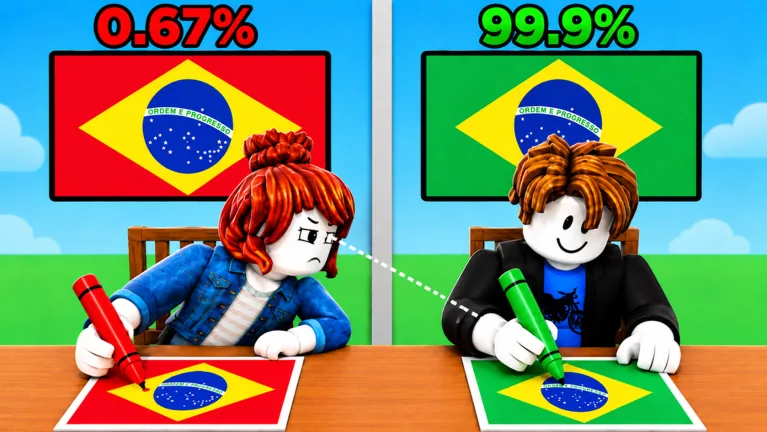
Watch the player attempts in the clip below to see the gameplay. Do not use their color choices as an official palette.
FAQ
What color is the background?
Deep green in the national design. The surrounding field is not white.
What color is the circle?
Red. Keep the circle’s color separate from the background’s color in your review.
Is the circle exactly centered?
The national disc is shifted toward the flagpole side. Use that detail to recognize the design; check the actual controls before assuming you can move the template’s circle.
Is there a guaranteed Bangladesh HEX solution here?
No. Use the national layout to check placement, then compare your color choices in the game. The layout and review routine do not give an exact game palette or scoring tolerance.